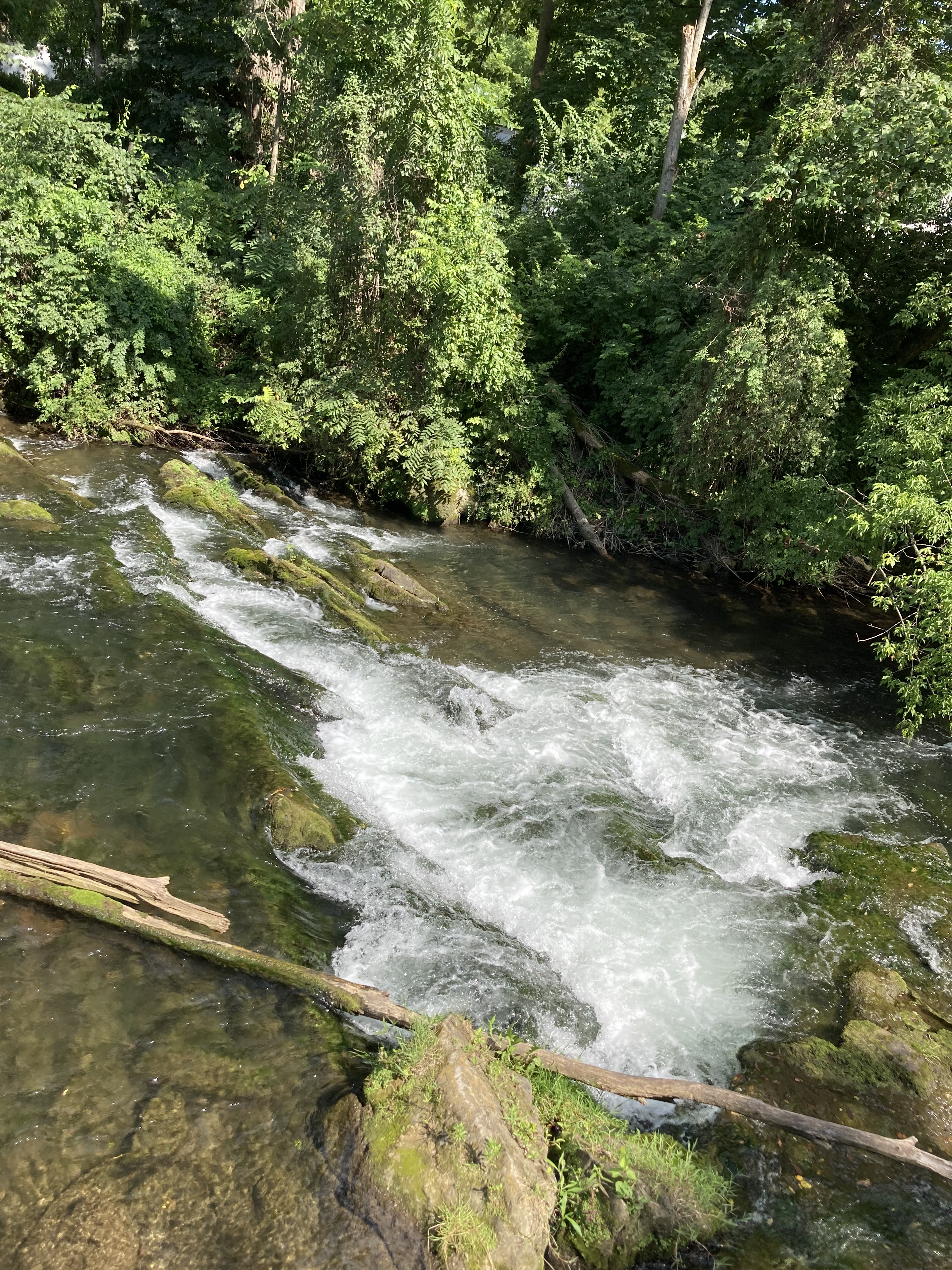
It was finally a nice day without humidity or rain today and since I had an appointment 2 hours after I’m done with work, I decided to take a nice walk rather than go home and then back out for my appointment. I went to a familiar place, Monocacy Park in Bethlehem by Ilick’s Mill, after going for an iced tea to drink along the walk.
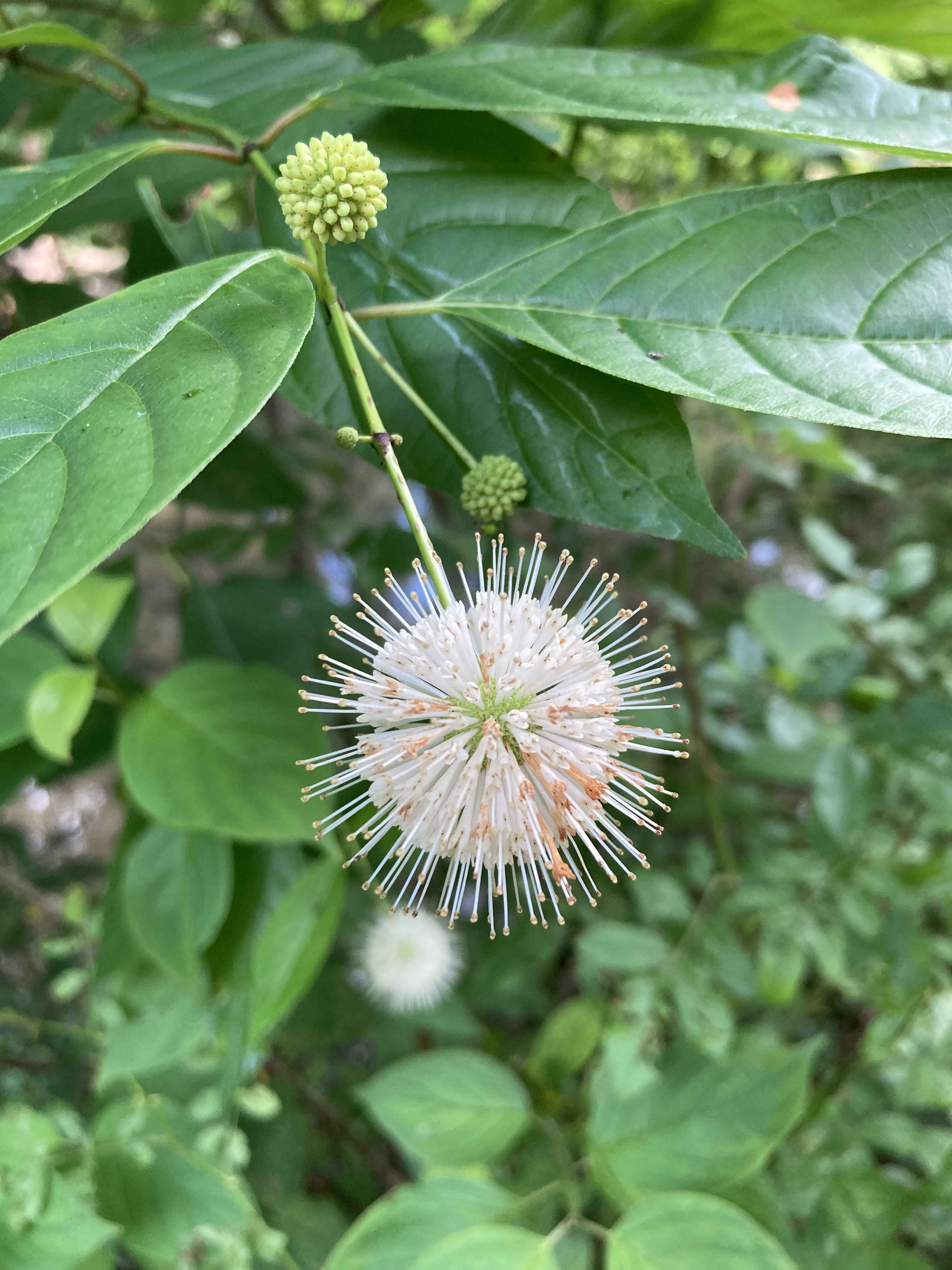
I usually just walk down the dirt path along the creek and back out the same way. Today, I headed down the trail next to the railroad bed and was almost immediately rewarded with the view of a grazing doe. She didn’t move much until I was about 10 feet away. Then, she only stepped a couple feet off the trail, as if to be polite but without being skittish at all. Obviously, she was quite accustomed to seeing people pass by her closely. I was glad I took the different route and continued the thought, going up to the railroad instead of back toward the creek. It seemed like I got to the trestle a lot quicker that way compared to walking the creek trail. I guess it’s more direct. I went a little past the train trestle than I usually do since I had time to kill and had gone a shorter route there. I looked around, enjoying the scene and the warmth of the sun on my skin and the occasional breeze felt great. There was also a nice scene of the stream and butterfly bushes and other blooms to take in. I then returned to the point I started on the rail, but went back to the creek trail to return to my car. I saw several types of birds and more flora.
It was time to be headed to my appointment by the time I got to the car, the perfect diversion. Even though I’ve walked there many times in the last few years, it felt like a different place today. Just that little change in course and location brought a whole different experience. It also helped me clear my head for my appointment and taking care of some personal business at home. I felt more focused.
I guess that’s a good life lesson. A small adjustment in the daily grind can make the day go quicker. A subtle shift in attitude or thinking, or even putting up a colorful bit of décor in your workspace, looking up some old tunes to listen to are all things that can change the background noise of your day enough to help you refocus. Talk to someone new or share something different with someone you already talk to. Try a new lunch spot or a new shop for a drink or a snack on your way home.
Dare to make any day a day of change, a day of newness, or a day of different perspective. Keep going and keep growing.
When dealing with bullies, or harassment, or systemic oppression, or any persistent problem, really, there are three important facets in affecting positive change.
The first is to resist. Anything they try to do to you, you evade or circumvent their efforts to whatever degree you can, you sabotage their efforts and you power through. Most importantly, though, after you’ve done any remediation you can, you simply live your life as though that wasn’t going on. Take the wind out of their sails. Bullies can’t stand it when their efforts go in vain. Take pleasure in knowing that it pisses them off to see you flourish. That helps to alleviate your own rage. Turn the tables on them. It’s not that they’re harassing you and getting away with it. It’s more like you making them ineffective and feeble, irrelevant, and pathetic losers. That’s what they are, of course.
As you resist, you will also rise against them. You will rise to a new level of existence. As you live in heightened awareness and ramped up determination, due to necessity, you will hone your coping skills and sharpen your God given strengths. You will learn that you are stronger than they are, and even stronger than you knew yourself to be. Bullies are weak, childish beings. They are powerless before God! Keep that in perspective.
Unfortunately, when bullying or harassment continues for years on end, as I am experiencing, it’s inevitable that it will get to you at times. You’re only human, after all, but just keep your eye on the prize. Play the long game, and play to win! You’re better than they are!
I have a magnet that has a silhouette of Bigfoot and says “Believe in yourself, even if no one else will.” I claim that over and over. I’ve been maligned and defamed and slandered by my enemies, underestimated and dismissed and misunderstood by friends and family, but I’ve learned to be self reliant. I don’t care what anyone else thinks, friend or foe. No one else has walked in my shoes. They can judge and dismiss all they want. I shall not be moved!
The last leg of the tripod of defense may seem a bit surprising. To reign. It’s bold, I know, but what I mean is to reign over your own life. Own the things you can control and let go of the things you can’t. Be you, and do it full blast! The more they try to crush you, the more you rise! Double down defiantly against the tyranny of the inferior!
An example of that is when I started weight training last fall despite continuous and ever escalating harassment. Despite being dog tired all the time, and getting a cold once a month like clockwork, I started working out for the first time in about 12 or so years. I was inspired by a book by David Goggins called “Can’t Hurt Me”. I highly recommend it.
So, get out there and reign over your mind, your emotions, your talents, your life! Take help if and when you can get it, and don’t shut out family and friends even though they may piss you off sometimes with their misunderstanding. No human is an island. You’ll need allies, but you’ve got to have your own body, mind and soul in the right place first. And remind yourself every day that: I believe in myself! I can do it! I shall not be moved! I will overcome! I will Resist, Rise, Reign!!!
Editor’s note: a friend who read this entry posted a comment, which I chose not to approve because it was a bit sarcastic and even felt a little bit mocking. I’m sure that wasn’t the intention, but I just didn’t want to allow any negativity to spoil the post. (I will note that this friend is very good about reading my posts and nudging me when I don’t post for a long time. I appreciate both those things. But I think he misinterpreted the part about starting to workout despite harassment. I was not saying that I’m harassed during workouts, but that the harassment has been constant in every aspect of my life for years on end and I began working out in that environment, despite external negative pressures. I took a positive, healthy action in the midst of petty people trying to drag me down. Perhaps I’m tooting my own horn in saying that, but hey, I deserve it. If you don’t believe in yourself, no one else will. And if they still don’t, double down.





You must be logged in to post a comment.