
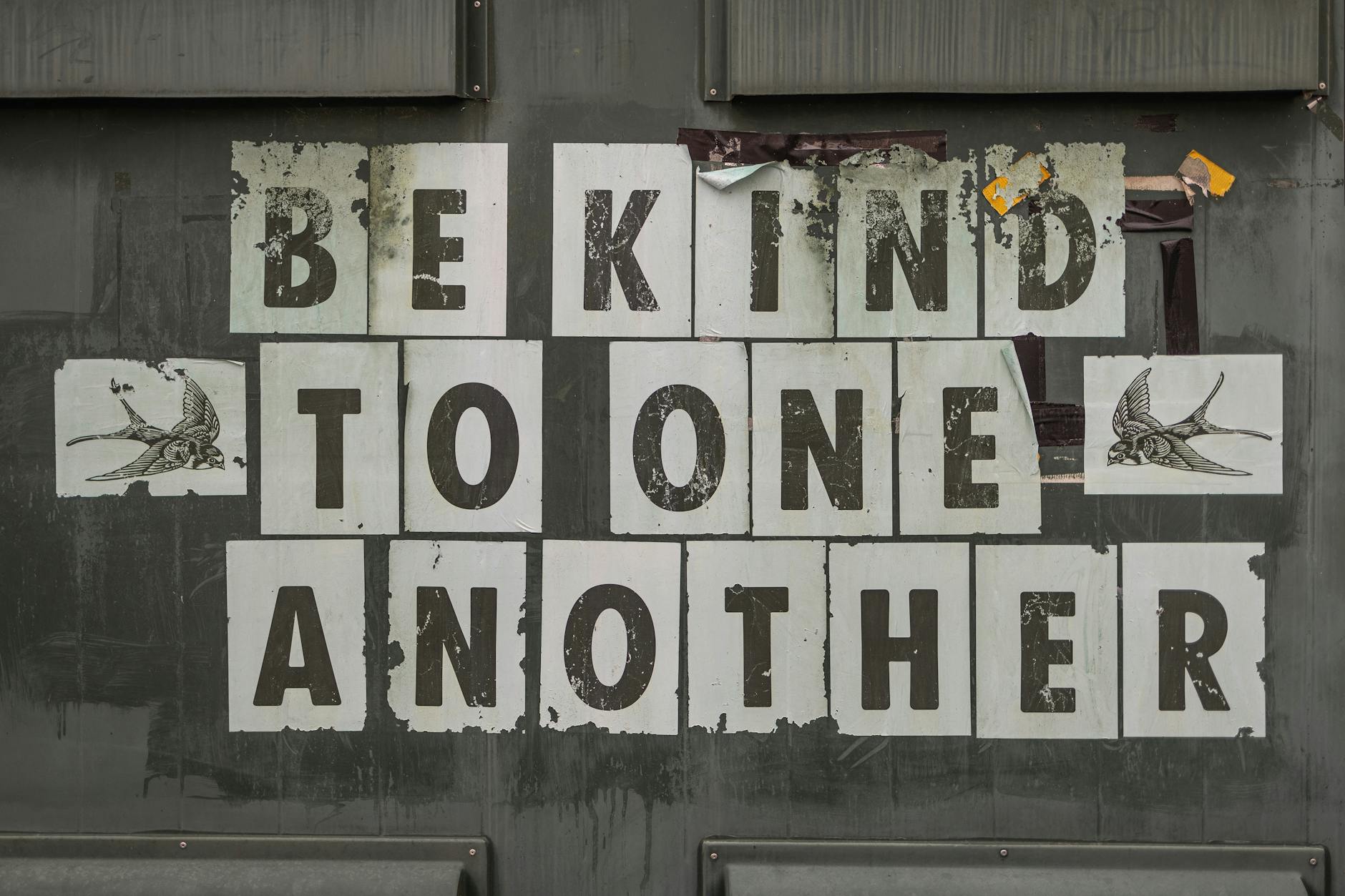
I saw on a bulletin board at work earlier this week that it was National Random Acts of Kindness Week. I can’t point to any specific act I did beyond my normal efforts to be positive, affirming and encouraging to those around me. So maybe this post is unconsciously an excuse, but I was reflecting yesterday on whether it’s better to do a random act of kindness or to look for ways to do something for the people already in your life, to be helpful and supportive on a regular basis.
Someone might say that you can do both and it’s not an either/or choice, and then I’d say, Damn you! It’s hard enough to think of blog topics to post about and now you’ve ruined it! So, instead of asking which is better, let’s just explore the topic as a compare and contrast exercise.
The random act of kindness done for a stranger is a good thing and I would never discourage it. It can be as simple as paying for the person next in line or throwing in the difference if someone comes up short or forgot their wallet. It can be passing on a coupon for something free that you can’t use or giving your extra ticket when someone had to cancel. Or how about discreetly paying for something when you hear a parent saying to a child, we can’t afford it, or buying a meal for a homeless person?
There are plenty of things that don’t involve paying for anything too of course. Helping a senior carry something they’re struggling with, or helping someone reach an item on a high shelf in the store. Giving up your seat for an elderly person or a pregnant mother or someone who just looks unwell or exhausted. All of these things can really lift the spirits of the recipient and they can then pass it on at another time when they’re able and spread goodwill in a world full of chaos and strife. I don’t see any real downside to the random act. I suppose there are times it could backfire if someone takes it as an insult like you think they can’t do it for themselves, but that’s probably rare and it’s their issue.
But what about the people in your life, whether close to you or just on the peripheral of your circle of influence? It’s understandable that we are often more reluctant to step in with those closest to us when we know their faults and mistakes and are tempted to think they wouldn’t need our help if they had done this or hadn’t done that. And sometimes, it’s a matter of someone not doing what they should to help themselves and the need to protect ourselves from a constant emotional energy drain that can result in those cases. But aside from that, when there’s a moment you could bring relief or even joy for a friend or family member, maybe don’t hold back. Don’t think of past issues or grudges or the blaming, judging thoughts. Just do it. When you can.
Also, don’t fall into the trap that some do, of doing something that the other person doesn’t really need or want, just because it makes you feel good. Then, you’re doing it for yourself and not for the recipient. It’s an odd kind of selfishness. All this may seem like it’s complicating the issue, and indeed you can overthink it, but if you’re in a good place mentally and emotionally and keep an objective but positive view of the world around you, then the Holy Spirit or the Universe or however you think of it, will guide you. Go with your gut.
I’ve often been told I’m a good listener and that’s a great act of kindness anyone can do. Just giving a moment of your time and really hear someone. An empathetic ear can really lift someone’s mood even if you don’t have the answer for them. That’s usually not what they’re looking for anyway. They just need to know someone cares. I remember a coworker a few years ago who had lost her mother, whom she lived with, less than a year before I lost my dad. We commiserated sometimes and she unloaded a lot about dealing with her family. One day she shared that her brother came out and said the thing that was the elephant in the room. He blamed her for their mother’s death, saying that she didn’t do enough to get help when the mother refused to seek help. It seemed unfair and an awful thing to say, even if it was understandable that the brother thought that. The coworker broke down and cried and I just gave a sympathetic ear and comforting words. I don’t know how much it helped, but I was glad to be there.
One act of kindness I like to do for people in my life, is to buy something I know they’ll love when I see an item at a thrift shop that is “so them”. It’s just a small inexpensive item so they don’t have to feel bad that they’re not reciprocating or that you spent a lot of money. It’s just a cool item that they’ll enjoy and they get to reciprocate in some way at another time. Of course, I don’t do it for that. I do it because I can and I see the opportunity. I think the key is that it comes from a place of genuine care and knowing the person well through ongoing acceptance and interest in their lives. That’s where an act of kindness springs from.
So, if you get the impulse to do something kind at a random moment, don’t resist or overthink it. But do think about opportunities to help, encourage or inspire those in your corner of the world in the daily grind and be ready to take advantage of such a moment along with the random ones.
Brighten the corner where you are!
 Sophisticated Neanderthal
You must be logged in to post a comment.